
Stonehenge
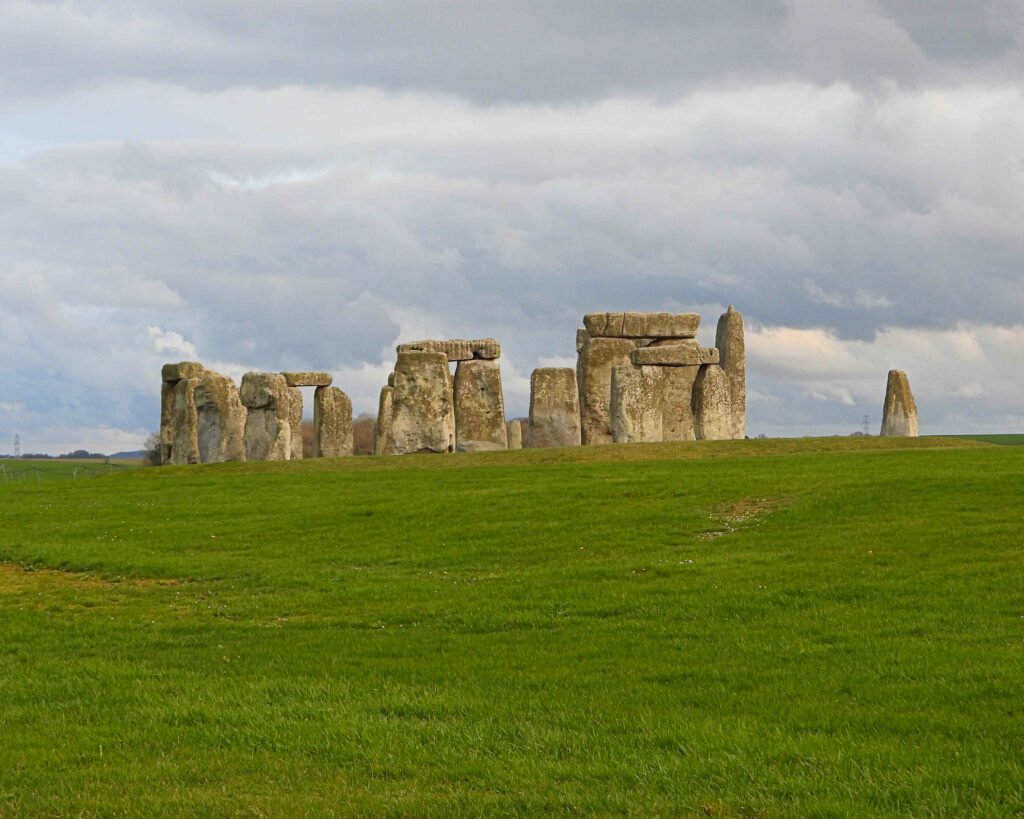
This year I had the opportunity to visit Stonehenge. My wife and I first tried to visit England a few years ago then COVID hit cancelling our vacation. Stonehenge was one of the things on my bucket list to visit before I kick the bucket. Fascinated with its history or should I say, lack of history, it’s definitely a place to visit if you get a chance. This year we got to visit Stonehenge not once but twice. We booked a first tour to the inner circle and as luck would have it, another tour we took to see the Roman Baths dating back to around 70 AD, included a visit to the outer circle of Stonehenge, so I got to go twice. 🙂
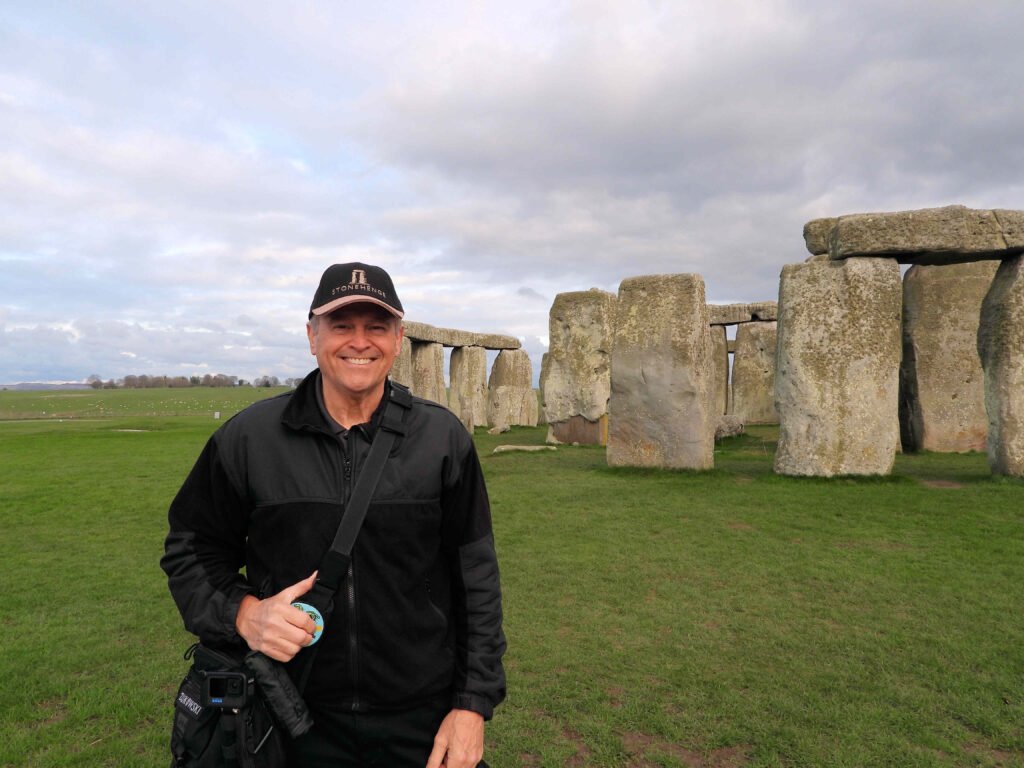
Stonehenge resides in a grassland area bordering south A303 which is the main route to London to the southwest. It’s basically right off the highway, matter of fact the road to go into Stonehenge was built over part of the complex not known at the time. Once thought as small rolling hills turned out to be burial mounds.
Archeologists estimate the first major construction of Stonehenge was around 3000 BC, consisting of a large circular stone enclosure. But before that, wooden pillars were erected during two different prehistoric periods, the earliest dates back to the Mesolithic period between 8500 BC and 7000 BC. Around 3000 BC, a circular enclosure known as the Aubrey Holes were dug. The enclosure was a ring of 56 pits, which probably held upright wooden beams.
About 500 years after that enclosure was built, enormous Sarsen stones were raised in a horseshoe and a circle, with smaller Bluestones placed between them. The stones were aligned on the midsummer sunrise and midwinter sunset.
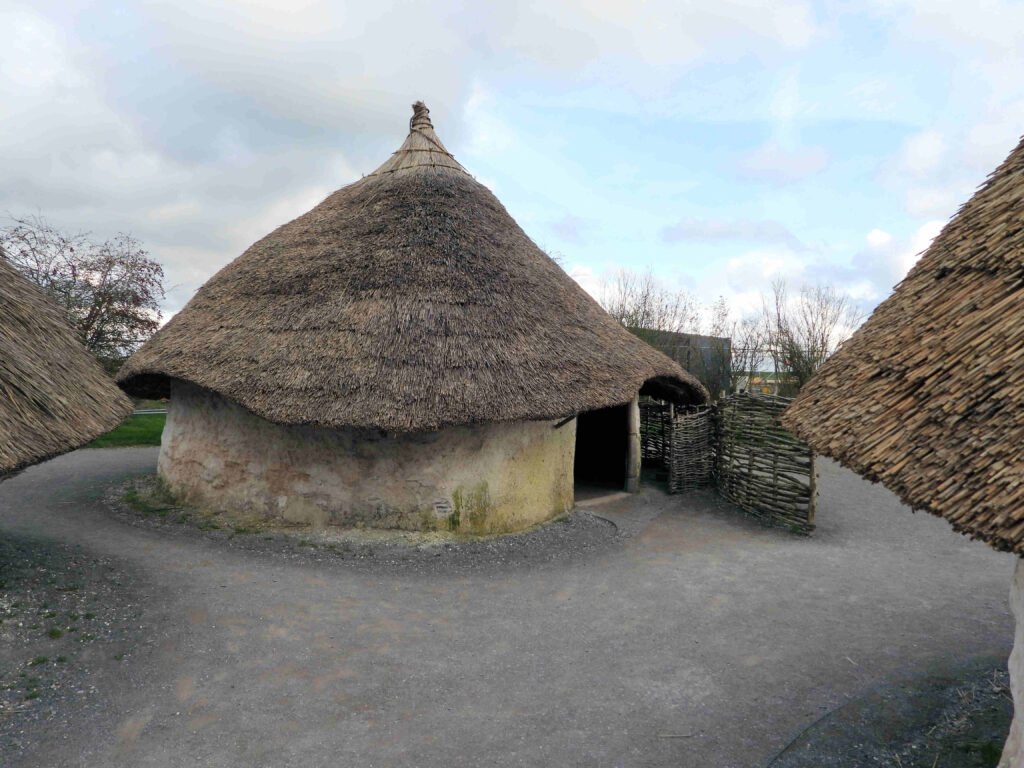
Recreation of huts on exhibit at the Stonehenge site, are an example of what the people might have lived in who built Stonehenge. These recreations are based on the archaeological remains of buildings excavated at Durrington Walls, just over a mile from Stonehenge dating back to around 2500 BC.
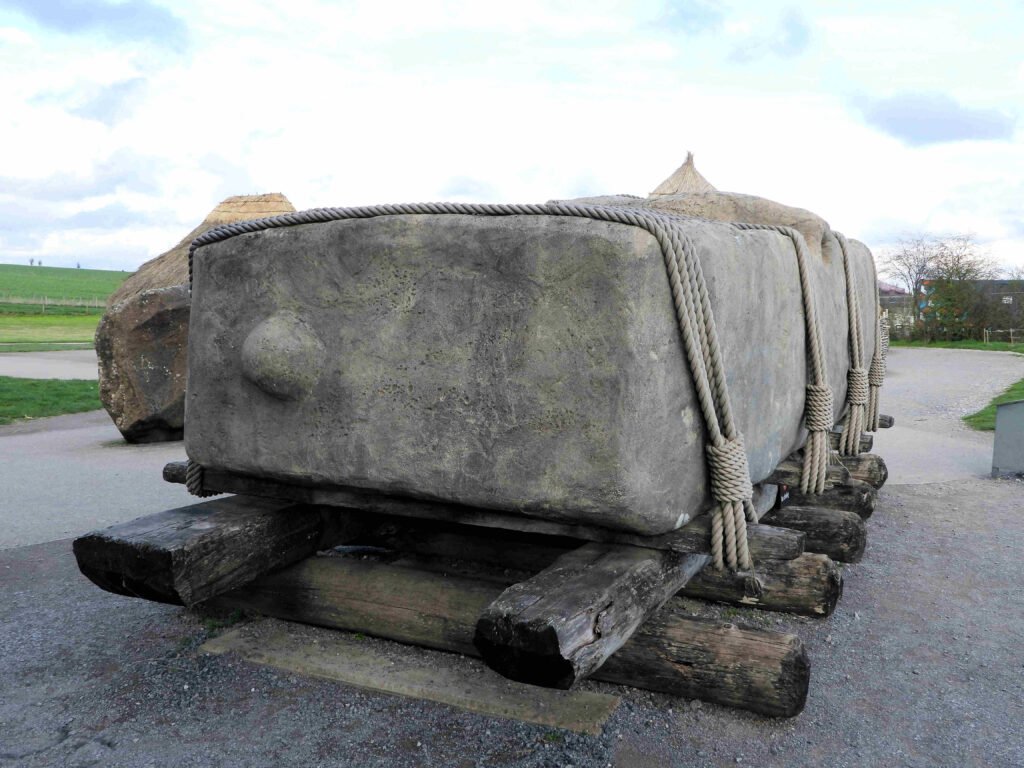
The Sarsen stones which form the outer circle and central horseshoe of Stonehenge, were transported roughly 20 miles from the Marlborough Downs located in Northern Wiltshire, England. Each Sarsen stone stands approximately 13 to 30 feet above the ground with an additional 8 feet buried for stability, giving the total length up to 38 feet. The Sarsen base vertical stones hold up the Lintel connecting stones which weigh around 7 tons.
So, think about the larger vertical Sarsen Stones which average around 25 tons each being of equal weight to an US M2 Bradley Infantry Fighting Vehicle.

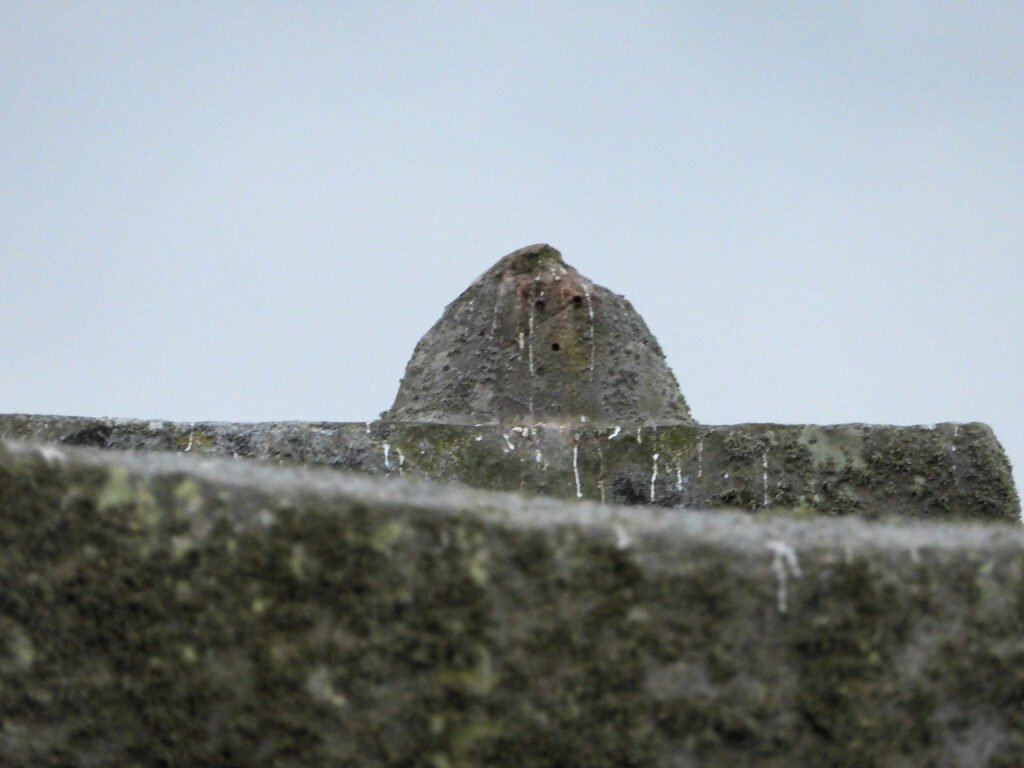
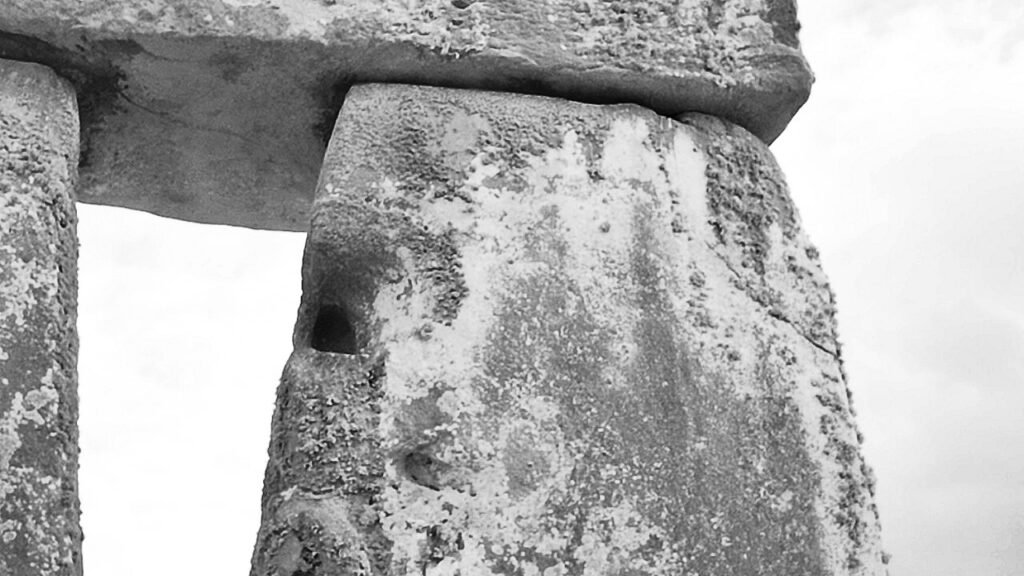
This is an infrared picture I took of a Sarsen stone connecting to the horizontal Lintel stone. The hole in the Sarsen stone shows this stone was used previously in an earlier version of Stonehenge.
I shot many daytime infrared pictures using a camera filter in hopes of seeing anything unusual.
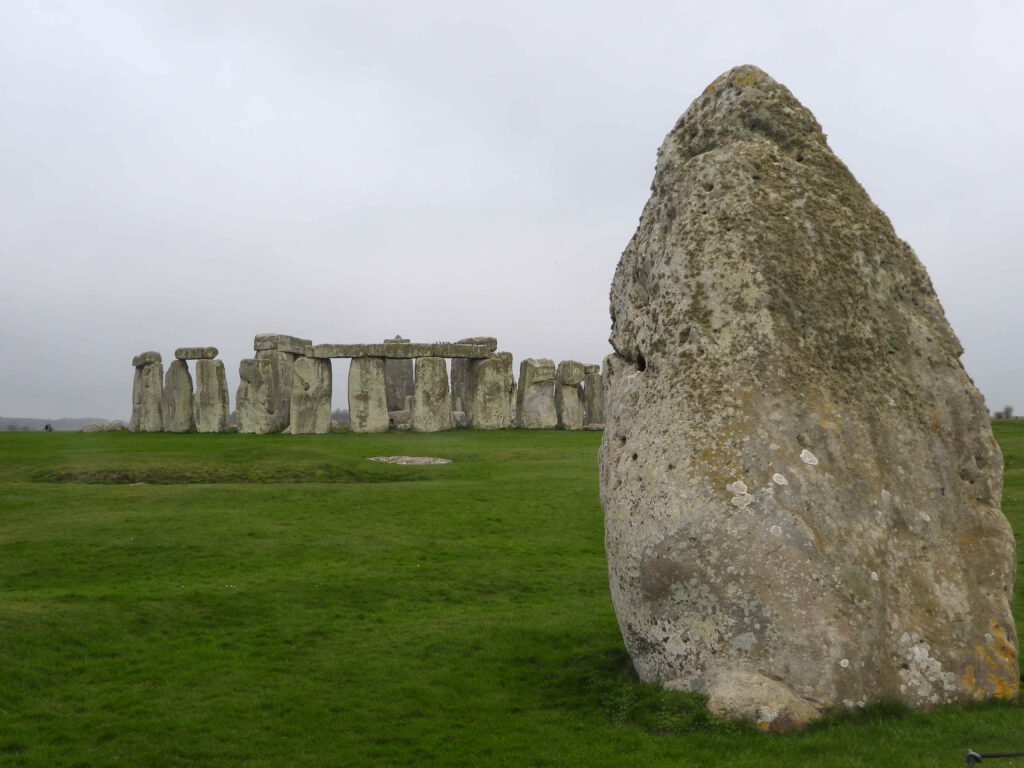
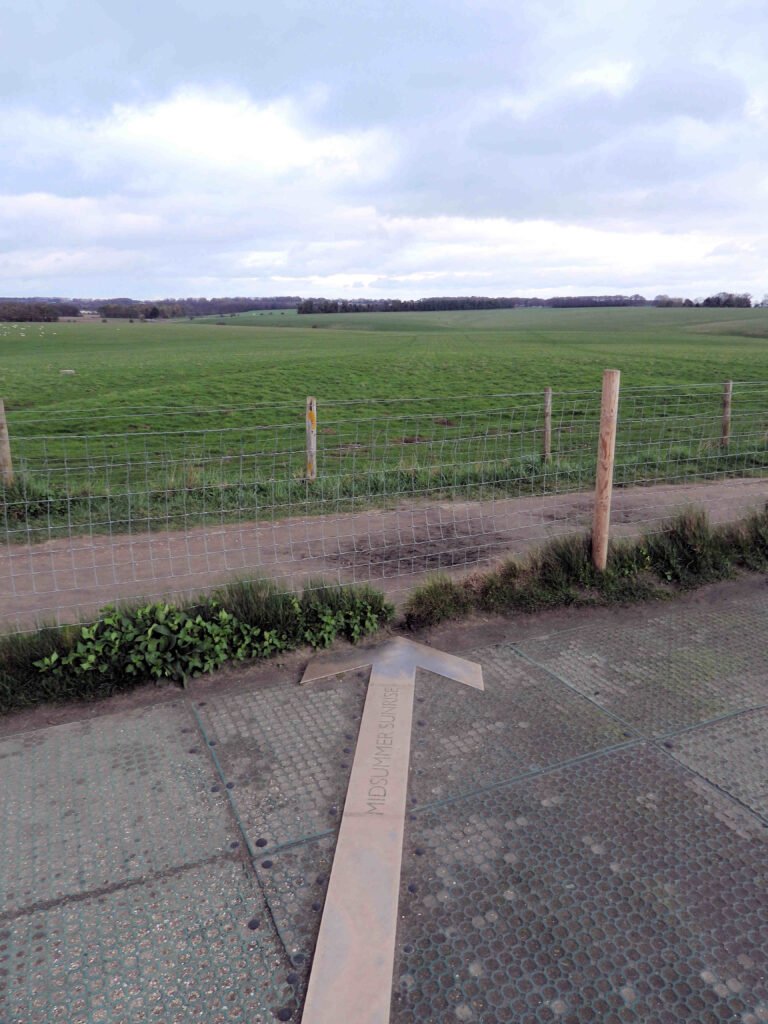
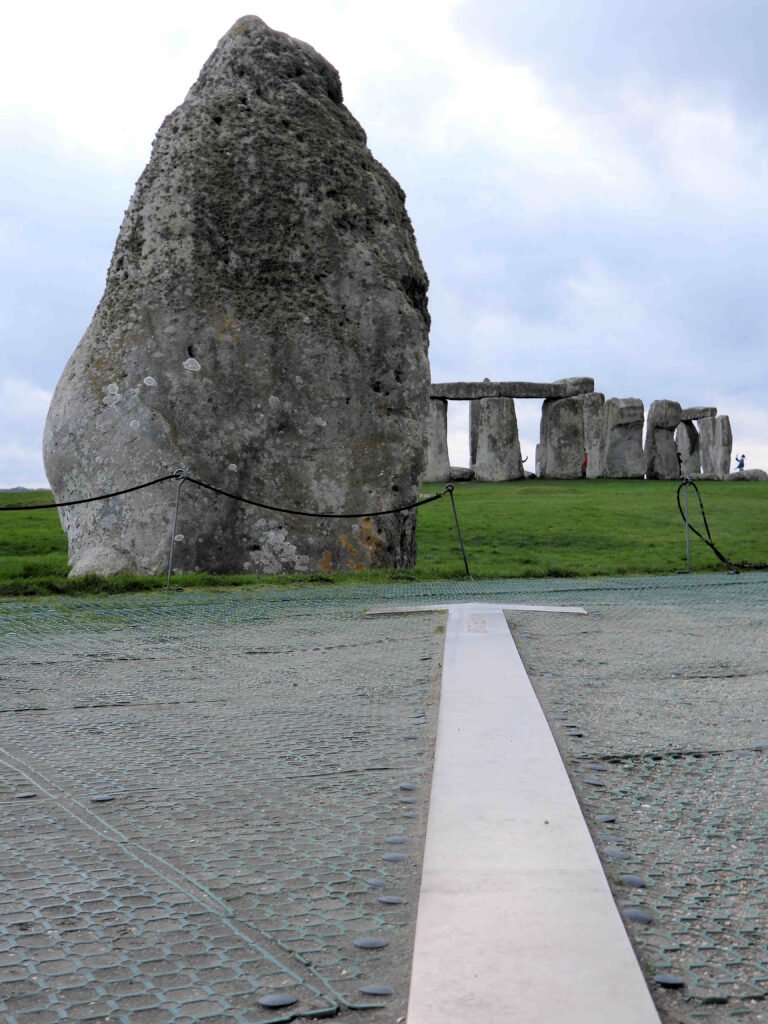
How this works: Stonehenge has an “axis” and alignment that runs northeast to southwest. Within the central stones this alignment runs through the open ends of the horsehoe’s of Saren and Bluestone to where the Altar Stone lies at the center of the Great Trilithon.
The “axis” location was carefully chosen because it can track important events in the annual movement of our Sun.
On Summer solstice, the longest day of the year, around June 21st, the sun rises behind the Heel Stone in the northeast part of the horizon and its first rays shine into the heart of Stonehenge where the Altar stone is.
For Winter solstice, the shortest day of the year around December 21st, standing in the enclosure entrance and facing the center of the stones, or near the Altar stone, you can watch the sun set in the southwest part of the horizon.
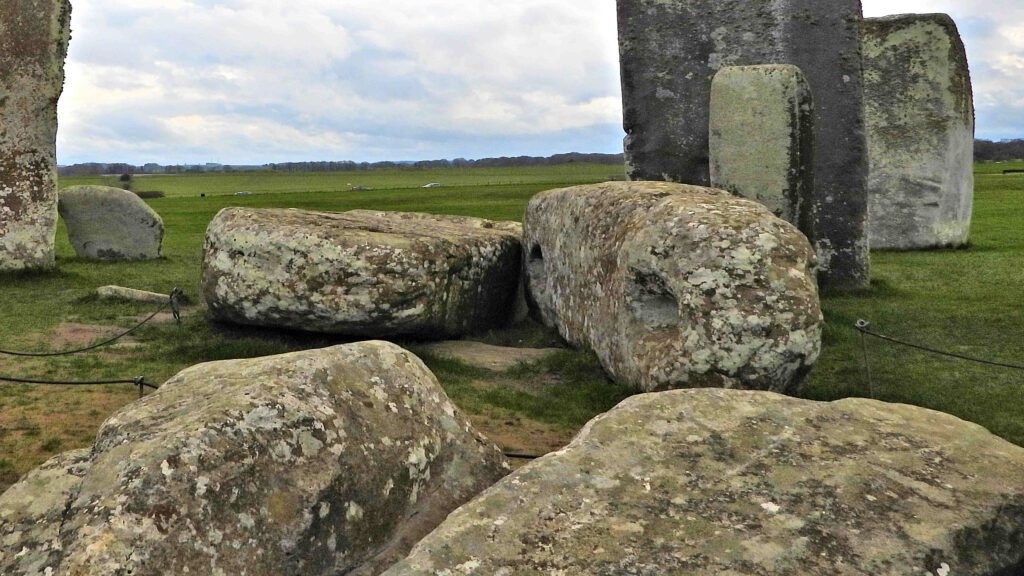
The Altar Stone lies in the center of Stonehenge, aligned with the monument’s solar axis. During the summer solstice, the rising sun shines directly down the avenue to illuminate the location of this stone. Conversely, a viewer standing at the stone during the winter solstice would look directly toward the setting sun.
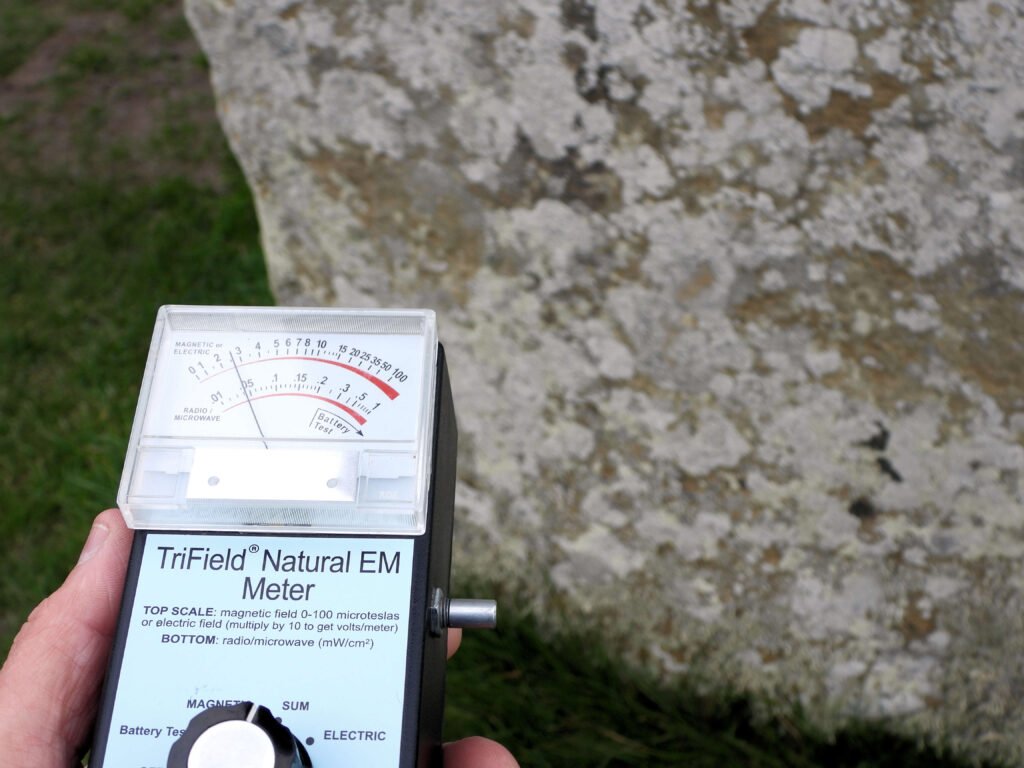
Besides experimenting shooting daytime infrared images looking for anomalies, I also wanted to take some EMF (electro-magnetic-field) readings. Walking around the circle I was reading on the average of 3 to 4 “microtesla’s” which is a unit of measurement of magnetic flux density. I didn’t see anything unusual, the readings I was seeing were basically energy the rocks absorbed from the Sun. I was hoping for some unusual high spikes as I walked through the inner circle.
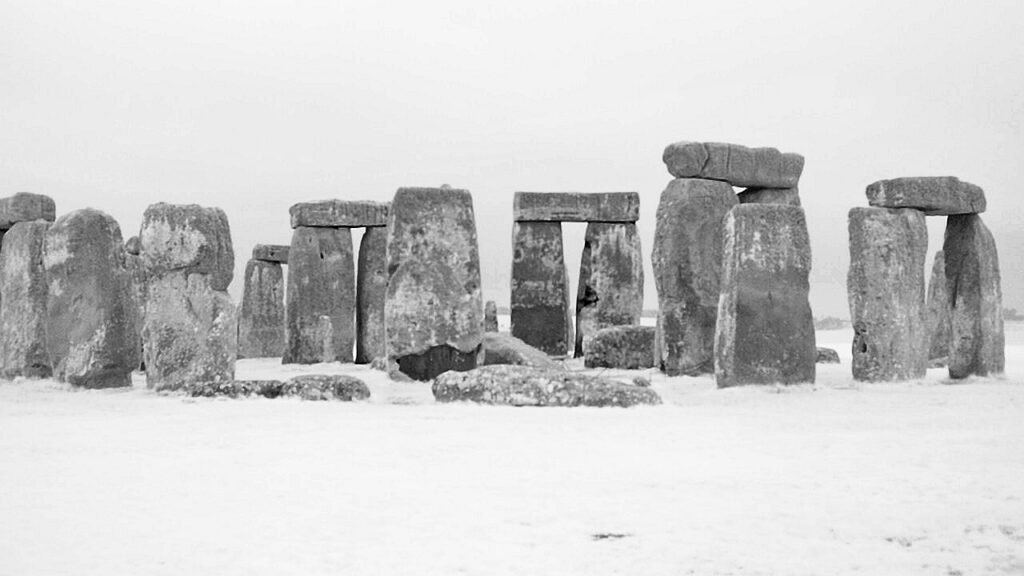
I walked around the inner and outer circle taking pictures with my SiOnyx Aurora Pro infrared camera. I’m able to shoot night-time infrared images because I attached a visible light blocking filter to the camera’s lens. This filter blocks about 98% of visible light which leaves me to see images in the infrared range.
This camera features a patented ultra-low-light CMOS sensor designed with an expanded spectral response. It detects wavelengths across the 400 nm to 1100 nm spectrum, which includes visible light and penetrates deeply into the near-infrared (NIR) spectrum. With a simple filter I can filter out the visible light.
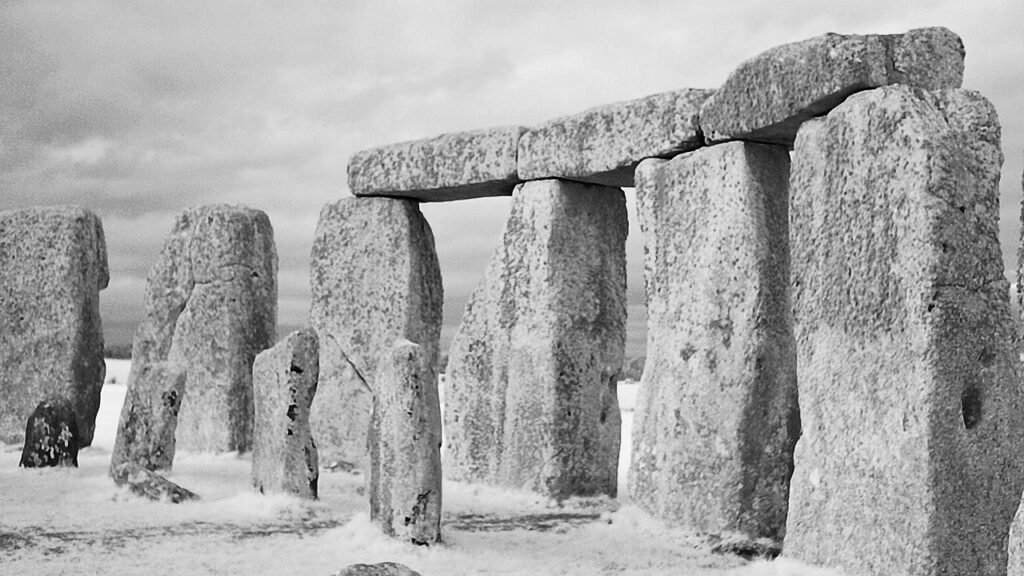
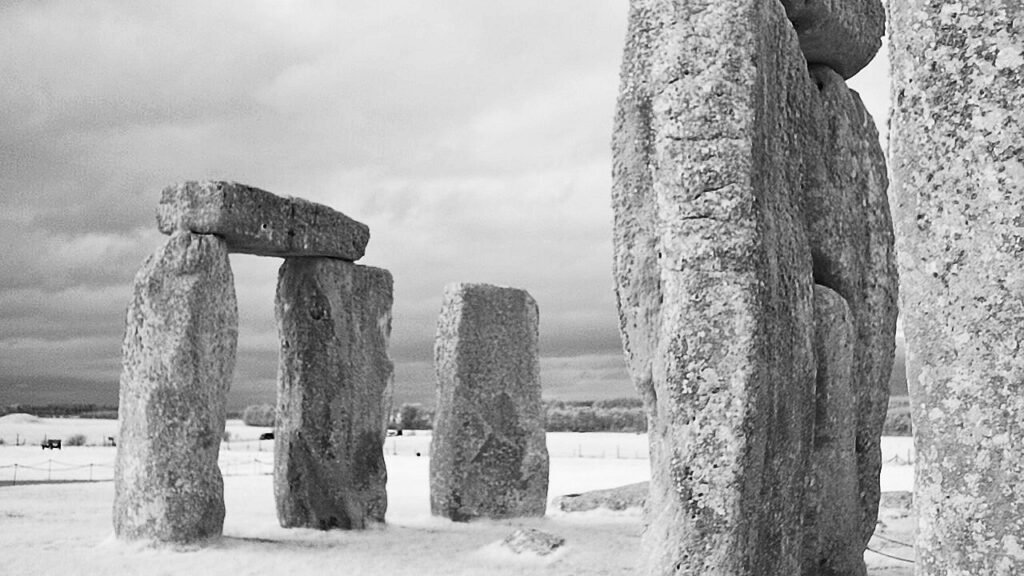
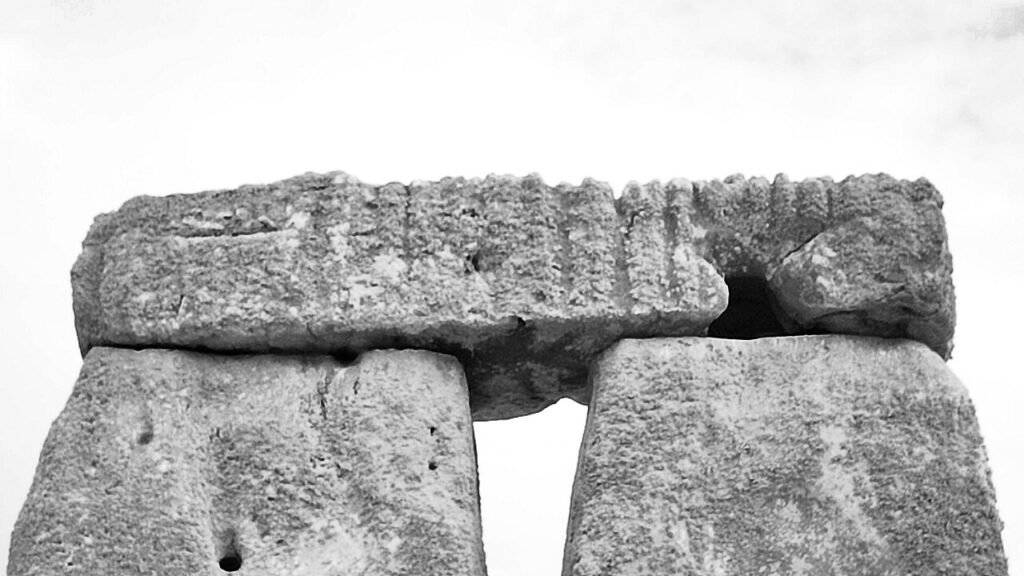
Some of the stones have distinct shapes with grooves and holes showing that they once fitted together in previous structures. The people of that time had no issues with re-using stones for their current needs.
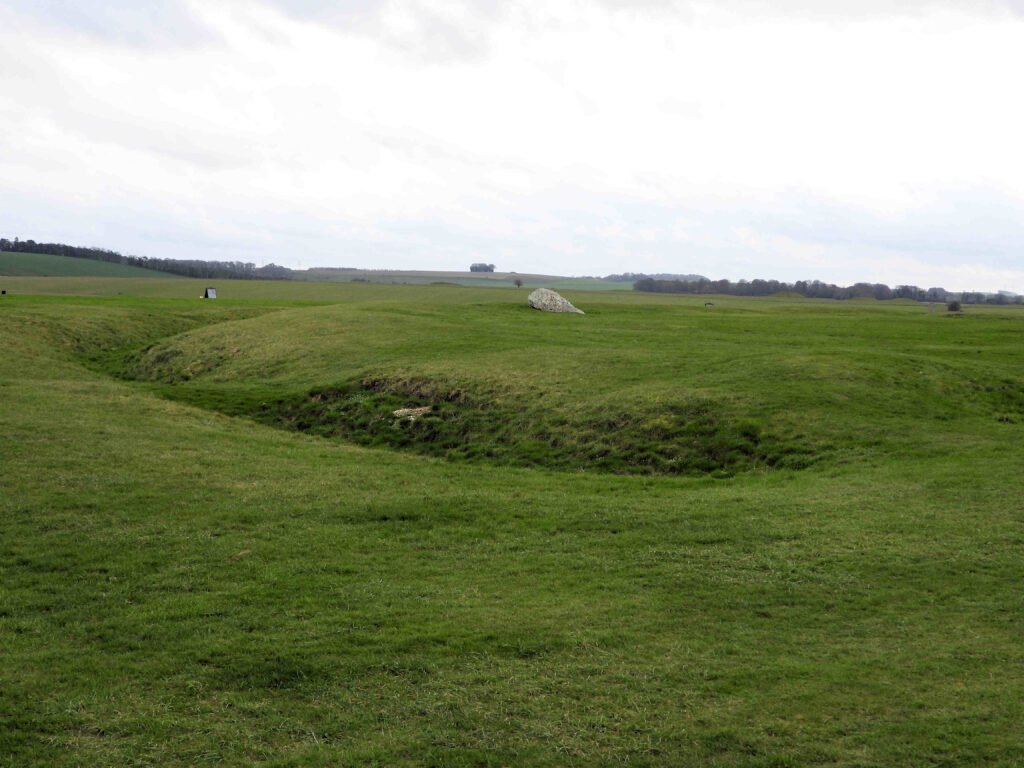
In this picture, trenches are seen just outside the circle. This is evidence of the first phase of construction at Stonehenge around 3000 BC. The Outer Ditch is a circular trench measuring around 330 feet.
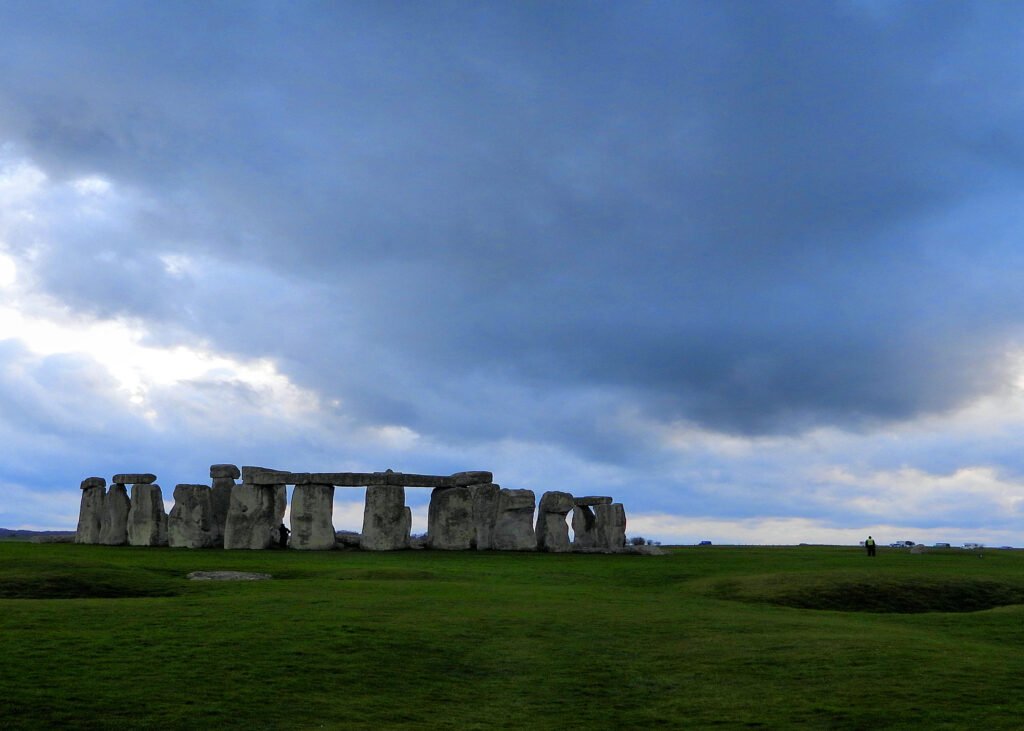
There are theories that Stonehenge was built by Aliens, but what I saw was more human engineering rather than Alien. Scientists and archologists estimate what we see today roughly took around 1500 years to build, of course there were pre-structures that existed which became more elaborate over the years. Moving those stones would have needed thousands of people and years to drag from location A to location B, but back then, I guess that’s what they did.
Now there’s a “How” and “Why” issue.
How is still being debated today, but I went over and over in my thoughts before, during and after I visited Stonehenge trying to determine if humans around 3000 BC could build such a feat and finally came to the conclusion; Yeah, it could be done.
The hardest part of building Stonehenge is getting the stones from their original location to the Stonehenge location. Then the large heavy Sarsen stones used to build Stonehenge are not easy to carve, they’re sandstone but hardened by silica. Tools were found at Stonehenge made of ultra-dense quartzite used to break off parts from the boulders, so there’s “rock hard” evidence of that. With thousands of people at someone’s disposal working night and day for years, this task can be done.
I personally have issues with ancient people building a crane and making rope strong enough to lift a 7-ton rectangular boulders 30 feet above the ground to fit on top of the 25-ton vertical stones, but it’s possible. It’s also plausible to dig a hole and drag a 25-ton rectangular rock into it, thus making it stand up, simple science by today’s standards. It would have been easier in my opinion to place all the Sarsen stones then make a large dirt mound around them with just the tops showing, then drag the smaller Lintel horizontal stones at their resting location. Once all the Lintel stones are dragged and placed at their location, then just dig back the dirt mound clearing all dirt around the Sarsen stones, leaving the ground embedded standing Sarsen stones with Lintel Stones on top.
But there are questions that need to be answered.
- Who came up with this idea?
- Who was the brains behind this technology?
- Who and how were the people influenced to do all the hard labor?
- Why this particular location?
- Why are there no rock etchings describing how it was done for their future generations? They obviously had the knowledge to communicate with each other and engineer great feats, but had no knowledge some type of writing?
Hmm, we can ponder these questions of the Stonehenge mystery, or we can just kick back and enjoy the scenery. There’s a lot of mysteries involving our human ancestors, it almost seems like we somehow lost a very intelligent race of humans. Was Stonehenge an astrological calendar or maybe something else?
One day we’ll have all the answers, but until then, we can have fun guessing.
Chuck Zukowski
Category: The Z-Files


